

Click for more pictures located in the gallery.
Making the most out of the least: Your tiny garage.

My first garage was, well it wasn’t really a garage. The place where I spent many a weekend wrenching on my first rally car was a small shed at the end of the driveway at my friend Sean’s house. Always fighting for space , we had to remove the bags of lawn waste, lawnmower, and gardening supplies before we could even think about bringing a car in there. Once a car was in there, good luck opening the doors or doing anything easy. Shelter from the weather and a place to wrench on cars with the help of good friends was what made that place special. I longed for a garage of my own.
Subsequent sheds, borrowed garages and driveways followed. I convinced my Dad that my brothers and I could insulate the garage in a weekend and a propane heater made the difference between working on the cars in the winter and a mission to the outer reaches of space. Have you ever changed brake pads when it was 14°F out? It is a whole new level of preparation and commitment. Fluid, tools, and physical tasks are completely different at that temperature.
Once on the West Coast, we got with an eclectic group of folks that rented warehouse buildings in the garment district of LA. Lots of space to be had for $200 a month, but you never wanted to leave your good tools there, and you could never really call it home. Because of course; the guy with the blacked-out caddy already called it home, he had been living out of his car for over 2 months. 😐 When we found that out, we bailed pretty quick. Transmission swaps in the UCI graduate student housing parking lot gave way to some rented shop space for $350 in San Clemente. Access to real tools, a lift, a tire mounter, etc. For a time this was as good as it gets. Then the economy tanked and the rent had to go up. I stuck it out while my space got smaller and smaller, eventually everything had to be on wheels, everything had to be mobile (including the rally car). This is a pain in the ass when you have a long term suspension and engine swap planned. It was time to save my cash, stash the rally car at a buddies house, and move the tools back into a plastic shed behind the apartment and buy a house – with a garage!
What do you get for a reasonably priced short sale in a nice neighborhood? You get 250 square feet. Now subtract space for the washer, the dryer, and the water heater. Ready to get all those extra car parts up on the shelves? How about you start with the 15 paint cans, the bucket of plumbing supplies, and the box of house fix-it stuff that you refuse to place on the hood of the rally car. Here’s my suggestions for surviving out of a tiny garage.
You have to start somewhere. Label the box of random house stuff – ‘House Stuff’. That way you won’t spend two hours digging through it looking for O2 Sensors. Put subsequent labels on it later. ‘House Stuff’ can become ‘House Stuff, Painting Prep, Door Hardware’. Call the P-Touch label maker geeky, but when you and your friends can find (and return) every tool in your tool chest, it’s worth cash money in time saved.
Being able to quickly roll work areas and tools around keeps things potentially more flexible then the huge garage with every tool needed in the large immovable chest. Harbor Freight furniture dollies work great for bins of spares, and FWD transmissions. Have some spare dollies in anticipation of your next project. Consider building a smaller mobile work table covered in scrap sheet metal with heavy duty wheels.
If you are a man – you no doubt consider the floor ‘a low shelf’. Now that everything is mobile in your garage, even 1 bin of parts not on wheels will be frustrating when you go to move everything around for a project. Since a box truck will never fit, why not use the magic space over 5 feet for wall shelves along the length of your garage. Consider a one foot deep shelf with angle brackets tied to the studs. Just like your sugary sweet cereal isle, put the stuff you use most at eye level, ‘good for you’ parts lower, and the super healthy un-used items up above.
Don’t have the time for drywall? Consider ‘Thrifty White Shower Paneling’ for the walls. It’s like $9 a sheet and you get three pretty good benefits: 1. You can hose it off. 2. You can write on it with whiteboard markers (and erase). 3. It makes pretty good projector screen material for Rockband or Rally games on the Xbox. 😀 Rolls of insulation are cheap, and even in Southern California – consider an insulated garage door. My garage door faces the SW and even on the hottest of days the garage is cooler then outside.
We’re not building a media center here. We just need access to alldatadiy.com and mp3’s. WiFi and $9 speakers makes the garage so much more productive. Most OBD software can run on a 486, so that old P4 with a gig of RAM will do just fine.
The 2GN gets dropped off for its roll cage
 There was some excitement this morning in the rallynotes.com garage. The 2GN was loaded up onto the tow dolly and brought down to Streetwise Motorsports for roll cage fabrication. We’re looking to get her back in July, but in the mean time we have some electrical issues to sort out on Ze’Neon (our first rally car) and some serious garage reorganization.
Quick note on choosing a builder: I’ve been talking with Doug at Streetwise about the 2GN rollcage details over the last month (and known him for about 4 years) and I think it’s important that you have a good working relationship with your cage builder – as their work is what really makes a strong and safe rally car. Sure, you and your buddies can weld up a cage, but consider that someone who has built a number of cars, and been around rally for years, is going to have a lot more experience with what works and what doesn’t.
Race seats will be on order shortly. Pictures of the build, fitment, and process to follow!
Some additional engineering necessary…
Just a quick note – The steering column and quickener needed some more effort. If something related to steering is off .05 from the center, it’s off a lot. 😐 After welding I re-assembled and found about 20 degrees of friction when turning. I stupidly assumed that the ID (inner diameter) of the column and the ID of the spline adapter were different and that’s why I tried to center the adapter from the outside. (Metric car made in Mexico – Adapter in the US) I cut it off to re-weld and was shocked to find that the ID of both were .755 and .753 respectively.
Instead of centering from the outside, all I needed was a metal pin that was exactly 3/4″. And that’s exactly what we did. My buddy Erik was able to find a steel dowel pin from McMaster for $2.32, he shipped it to his office and we welded it up and tested it last night. Check out the video of the Dodge Rally Neon steering quickener test.

Seam welding, mock up, and fabrication

Seam welding, or stitch welding, is where you take and join the layers of metal at the seams on a chassis. Modern uni-body cars are made up of dozens of pieces of steel that they spot weld together. Spot welding is fine for a street car, but spot welds start to pop in a car that is bounced, jumped, bumped, twisted, and raced. As we want to build in some serious longevity into this car, we’re taking the time to weld all the metal panels together.
My friend Erik came over with his welder (Thanks Erik! :D) and we started with the interior. I had prepped a bunch of areas by grinding the paint away and we were able to get through it quickly. We still have the rear strut towers, trunk, and undercarriage to do.

I’ve had parts of the dashboard in and out of the car a dozen times. I want to see what is going to work and what won’t, and the best way to do this is to mock it up using a couple of bolts just to hold it in place. All of the extraneous plastic and metal is out of the dashboard and the HVAC system and piping has been reduced to a minimum. I actually think I’ll duct the floor heat, making it better then it ever was. 🙂

The heavy fabrication was done yesterday with a new steering wheel, extension, steering quickener, and floor mounted gas pedal. I had just about given up on the “tilt wheel” with the Howe 1.5:1 quickener, but I was able to make it work after an hour of critically examining the steering. I modified the cast piece that hinges the column up and down, and was able to slide the housing of the quickener into it. Now I just need a bracket from the upper part of the column to support the quickener. While I was at it I solved an issue where the aftermarket steering adapters don’t reset the blinker. Adding two small threaded posts with a plastic covering on them I was able to restore functionality. Check out the quick video of the steering blinker reset in action.


Taking my time during fabrication means I’ll have no-compromise steering, A gas pedal in a Neon that I can actually heel-toe with, and a car that is ready for whatever rally can throw at it.
The Motor is out, now for serious business.
 Last weekend a gathering of rally friends helped take out the 2.0L 420A. This was made easier by taking a Sawzall to the radiator support. 🙂 As we were taking the motor out we discovered some pretty serious damage to the bottom core support and the wiring harness that goes to the lights. This had been ground into by the AC compressor upon hitting whatever bent the metal of the front end. 😮 This explains the melted connector on the back of the headlight switch and the crackle sparking sounds when I turned on the fog lights.
Next is a serious discussion about the roll cage design for the 2GN. When I built the first Rally Neon I was hesitant to put any info of authority on rallynotes. I was new and didn’t want to come off like some expert on the rules for roll cage design. This time around I’m still no expert, but I’ll show you what we’re planning.
 This is my proposal for a door bar layout. I think the door bars are one of the most critical areas and it’s important to balance safety with the ability to get in and out of the car.
The rules: NASA RallySport / Rally America Both sanctioning bodies have a slightly different view of the best method for coming up with a safe roll cage. I could write a book about the complex differences between the two organizations, but I’ll summarize what you need to know: Both organizations accept each others log book. NASA Rally Sport requires FIA seats and Rally America as of this writing does not. Which rule-set should you use? YMMV. Find someone who has been building rally roll cages for a few years and has some experience.
The sill bar. Back in 2003 when SCCA was running the show, there was a movement in the rules to get an additional door bar added. Before this, you only needed 1 bar going from the main hoop to the front A-pillar. I can’t even imagine sliding sideways at 90MPH with a single 1.5″ door bar… Then again, cars used to be made from steel and not hydroformed .0025″ thick zinc coated plastic sheets. 😉 The solution was to add a straight bar from the main hoop to the A-Pillar close to the floor on the sill. A lot of rallyists started adding the full “X” WITH a sill bar, but the minimum in the rules (as of mid-2011) is only 2 door bars. Sill bar and a diagonal, OR just the “X”. After seeing a car take a tree stump in the door with just the “X” – we’ll be adding the additional sill bar.
The bar from the corner of the windshield to the floor (along the A-Pillar) is now mandatory and we’re considering adding it to our production car. These cars are “jellybeans” and where a 1988 VW makes a 45% bend for the windshield, the Dodge “cab forward” design is this 15% decaying slope that needs to be strengthened if it’s to survive a hit there.
If this design looks impossible to get in or out of the car with, consider that the stock dash extends beyond where the A-Pillar diagonal is, and the proposed door bars are no higher then the ones in our Production car. Will the full “X” make it a little harder to get in and out? I’m sure. Will we be going a little faster then in our Production car? Absolutely!
2GN Progress Report

The interior and extra weight is out. I need to get a couple extra grinding discs and wire wheels to get the drivers side door metal out and the extra thick seam sealer in the hard to reach spots. The air-box for the heat and AC is dependent on the heater core and I’ll need to drain the coolant before pulling that out and re-engineering it.
Draining the coolant means that it’s just about a good time as any to pull the motor. The motor has to go if we’re going to seam weld, plate, and strengthen the front end. To keep it easy I’m going to cut the radiator support out and we’ll be changing that up anyway. I don’t know if I’m ready to put “tubular K frame” on the to-do list, but it’s being considered.
This weekend some friends and past crew members will be giving me a hand. Soon the 2GN will become more of a shell then a car. Rally prep at the rallynotes.com garage is well under way!
Rally Cars and Wire Splices
 There are two things that you will never find in my rally car. ‘Vampire Taps’ & ‘Butt Splices’. The first is an absolute NO. Vampire taps only work under ideal conditions and wire thickness. Too big and they make a poor connection, too small and they chop the wire in half. Both of these failures are acceptable for stereo systems, but not when you’re hooking up things like intercoms and rally computers. If you have to make a tap, trim away the insulation with a proper wire stripper, wrap the new wire in, and solder.
The second item has been part of an argument for ages, so I’ll give you my take. I hate butt splices. Even if you have a $50 proper crimper and you use the non-insulated ones and cover with heat-shrink, I just prefer a soldered connection over a crimped one. Wires are more likely to get pulled out or snagged in a rally car and that’s when butt splices fail. Here are two good articles on getting it right: Soldered Lap Splicing of Wires – Master a perfect inline wire splice everytime
This post was inspired from the vampire tap clean-up that I had to do on one of the wiring bundles in the 2GN. A previous owner had an aftermarket alarm installed and several of the taps had either severed or broken most of the copper wire it was clamped to. 🙁
Wiring Effort

Somewhere between a rats nest of wires doomed to start an electrical fire and military grade wiring found in attack helicopters, you will find what I’m doing with the wiring on the 2GN. Primarily for organization and keeping things neat, I took the “wiring trough” that sits on the dash out and went through the harness. I wrapped everything remaining up with zip-ties and removed a lot of the sticky tape. You certainly don’t want bundles of exposed wires, but if you need to fix an electrical problem, you don’t want to spend an hour on the side of the road identifying and unwrapping wires. Unlike a turbo swap in a GC8 Subaru, I really don’t need to change anything with the harness for the SRT-4 motor. The 2003 SXT plugs right in, and is a major reason why we sought out that particular year and model.
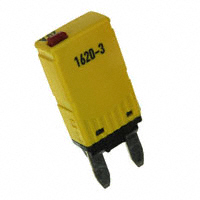 I’ve had my eye on 12v resettable fuses for a while now and it’s something that I think will really come in handy on a modern rally car. The E-T-A 1620 series are automotive grade circuit breakers that fit in a “mini fuse” space. Around $5 each they beat a zip-lock baggy of replacements in the ash tray. Along with these I ordered a number of switches for the cockpit panel and some some separate 12v circuit breakers for things like lights, rally computer, and transceiver. I also ordered some spare Molex type connectors to better interconnect the harness in the rear of the car. I will be able to change out the melted and cracked connector that goes to the lights and blinker switch. 😮
Rally cars and zip-ties
 Zip-ties, duct tape, and bailing wire are the most common MacGyver items in a rally car. When a rally is in town, we usually have more spare zip-ties then the local Super Walmart. Zip-ties are a rally essential, but you need to pickup an essential tool for installing them: A pair of flush cutters. Plastic knives can be pretty sharp and poorly trimmed zip-ties can be sharper! I’ve seen and had some pretty bad lacerations from the remaining 1/4″ of zip tie that was bevel cut into a sharp spike by standard wire cutters. I now avoid using them on the roll cage and tuck the zip-tie head as far away as possible. Don’t have a flush cutter handy? In a pinch you can use a lighter to soften and melt the end.