2626 pounds is actually a good start for a compact sedan in the 21st century. Gone are the days of 1800lb Civics. Now cars are fat – 3100lb hatchback fat. Sat-nav, iPod, climate control, 50 airbags, ABS, side beams, crash bumpers, etc. Don’t get me wrong – these safety items will allow you to take an SUV in the door, but if we all drove 600 pound carbon fiber cars, we’d save a gajillion tons of fuel and accidents between cars would ‘usually always‘ be survivable.
Making up for the 200 pounds of roll cage, steel plates, and rally safety equipment going in should be easy enough with all of the interior trim and dashboard out. Getting a rally car lighter then the day it sat in the showroom takes an angle grinder. 😀
 I took the rear doors down to what I call a ‘safe minimum’. I’ll leave the glass in for now, but there is enough metal to support the window and keep thieves out. The inner metal only accounted for a pound, but it gave me better access with the grinder / sawzall. The door beam weighed in at 4 pounds. The window roller mechanism was a pound. I’m estimating 7-8 pounds off of one door with the plastic trim, all the bolts, and the metal cut out. 28-32 pounds saved on the car from all 4 doors.
 Next I had some fun with science. My local grocery store had dry ice available, so I picked up about 8 pounds of it. The clerk handled it much like a radioactive isotope and I was asked by a little old man in line “What do you need all that for?!” I responded quickly and with authority – “It’s a science experiment.” Then I grabbed the top of the bag with bare hands and made it out the door. “Be careful!” they shouted after me. :p Guys, it’s minus 80 cold, not minus 300 cold… Wear gloves, but it won’t instantly kill you if you touch it with bare hands. “You could get frostbite! OhNOES teh frostbite…” Broken up into chunks, the cold hardens and contracts the 1/4″ thick tar sound deadening. After a couple of sharp blows with a hammer and some scraper work, about 15 pounds of sound material hit the trash.
(Weight savings = faster car) Let’s look at the numbers: For this 2626 pound car making a completely stock 132HP we could (on paper) see an 1/4 mile time of 15.78. Now take a reasonable 200 pounds off and you have a 1/4 mile time of 15.37. Okay, only .41 faster, but consider that the stock motor would have to make 10 more HP to do the 1/4 mile in that time. How about 400 pounds lighter? Now you have a 14.94 second Dodge Neon that would be making the equivalent of 156 HP in stock weight to clock that time. Is 400lbs. realistic? *ehhh… Certainly possible, but you’re looking at fiberglass / carbon fiber hood, trunk, and fenders. Plexiglas windows, and you’re pulling unused copper wiring out of the harness. I don’t know if I’m THAT dedicated… My goal is to have the 2GN in rally-trim with a tank of gas sitting at 2600lbs.


 There are two things that you will never find in my rally car. ‘Vampire Taps’ & ‘Butt Splices’. The first is an absolute NO. Vampire taps only work under ideal conditions and wire thickness. Too big and they make a poor connection, too small and they chop the wire in half. Both of these failures are acceptable for stereo systems, but not when you’re hooking up things like intercoms and rally computers. If you have to make a tap, trim away the insulation with a proper wire stripper, wrap the new wire in, and solder.
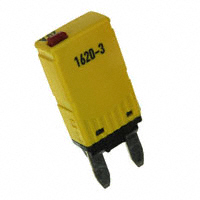 I’ve had my eye on 12v resettable fuses for a while now and it’s something that I think will really come in handy on a modern rally car. The E-T-A 1620 series are automotive grade circuit breakers that fit in a “mini fuse” space. Around $5 each they beat a zip-lock baggy of replacements in the ash tray. Along with these I ordered a number of switches for the cockpit panel and some some separate 12v circuit breakers for things like lights, rally computer, and transceiver. I also ordered some spare Molex type connectors to better interconnect the harness in the rear of the car. I will be able to change out the melted and cracked connector that goes to the lights and blinker switch. 😮
 Zip-ties, duct tape, and bailing wire are the most common MacGyver items in a rally car. When a rally is in town, we usually have more spare zip-ties then the local Super Walmart. Zip-ties are a rally essential, but you need to pickup an essential tool for installing them: A pair of


